
Searching Cases by Name
The statewide Indiana MyCase search is where most Jay County lookups start. Open the Name tab and type a last name or business. Then set the Court filter to Jay County. Add a first name, category, status, or filing range only if the results need narrowing. Birth date can sharpen the search. Treat it as private data, though. Do not copy or publish what you find there.
- Open MyCase and select the Name tab.
- Enter the last name or organization name.
- Select Jay County or Portland City Court.
- Narrow by category, status, or filing date.
- Open a match and verify its court and number.
The fields have distinct purposes, so a simple query should come first.
| Field | Type | Required | Notes |
|---|---|---|---|
| Last name | Text | Primary | Up to 40 characters |
| Business | Text | Alternative | Organization route |
| Court | Dropdown | No | Jay County or Portland City Court |
| Category | Filter | No | Criminal, civil, family, probate |
| Status | Radio | No | All, open, closed |
| File dates | Date | No | MM/DD/YYYY range |
Jay County MyCase Tabs
MyCase offers three separate tabs: Case, Name, and Attorney. The Case tab takes a single case number, citation number, or cross reference. Name works for people and organizations alike. Attorney accepts either a name or a bar number. These are independent paths, so fill one rather than all of them at once.
The official search tips walk through how each field behaves on the public form Jay County searches use.
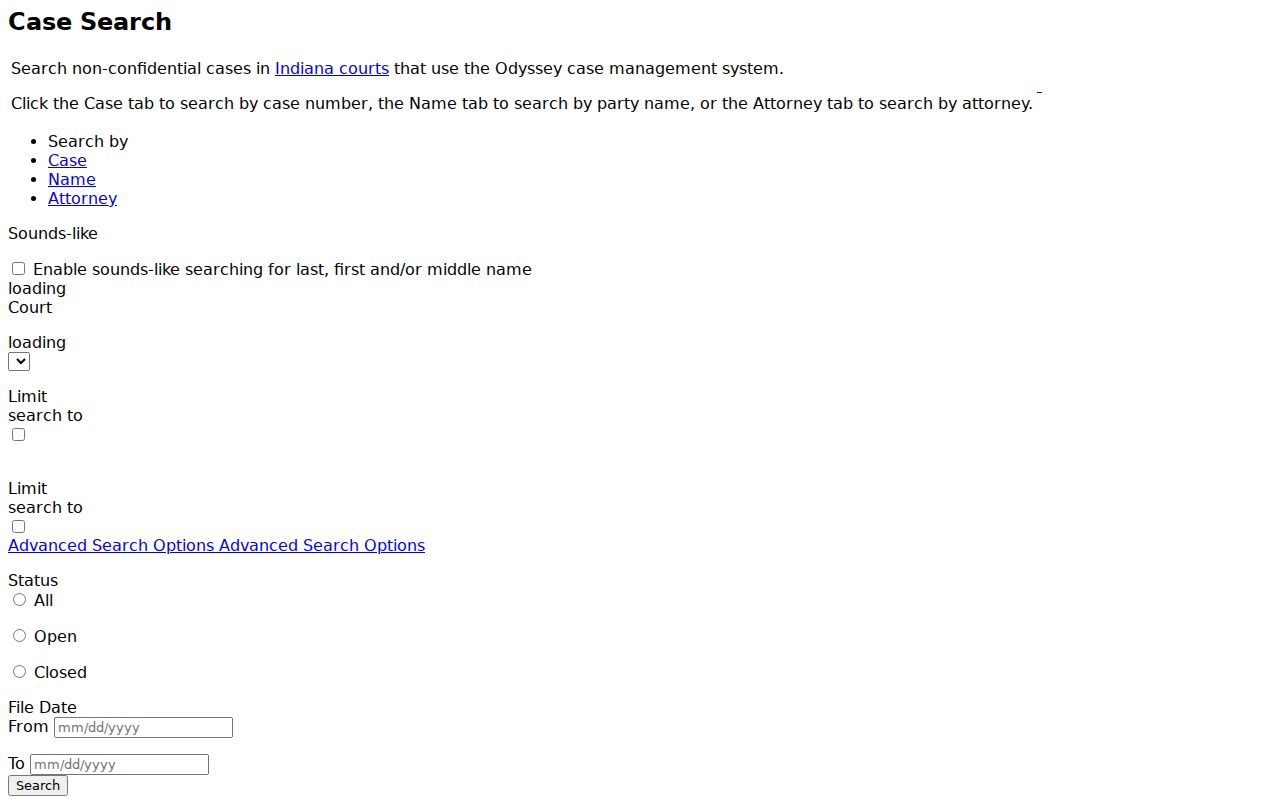
The right tab and court filter prevent many false matches.
Searching by Case Number
An exact number is usually the fastest route into a docket. Indiana builds its case numbers from the county, court, filing year and month, case type, and a sequence. A neutral Circuit pattern looks like 38C01-YYMM-CC-######. Jay County uses code 38, Circuit C01, and Superior D01. The old 38E01 court code is abolished, so a converted case may need a call to the clerk.
Type every character just as printed. Citation numbers have no single statewide display form. A cross reference might come from a prosecutor, a police agency, or a legacy system. Try one identifier at a time.
Jay County Name Search Fixes
Sounds-like searching catches alternate spellings of a Jay County name. A trailing asterisk can widen a word ending. Whole first-name or last-name wildcards are barred, and you cannot combine sounds-like with a wildcard. Anything past 1,000 matches is too broad. Keep the Jay County filter and add a first name or a date range.
The MyCase guidance lays out how these controls work.
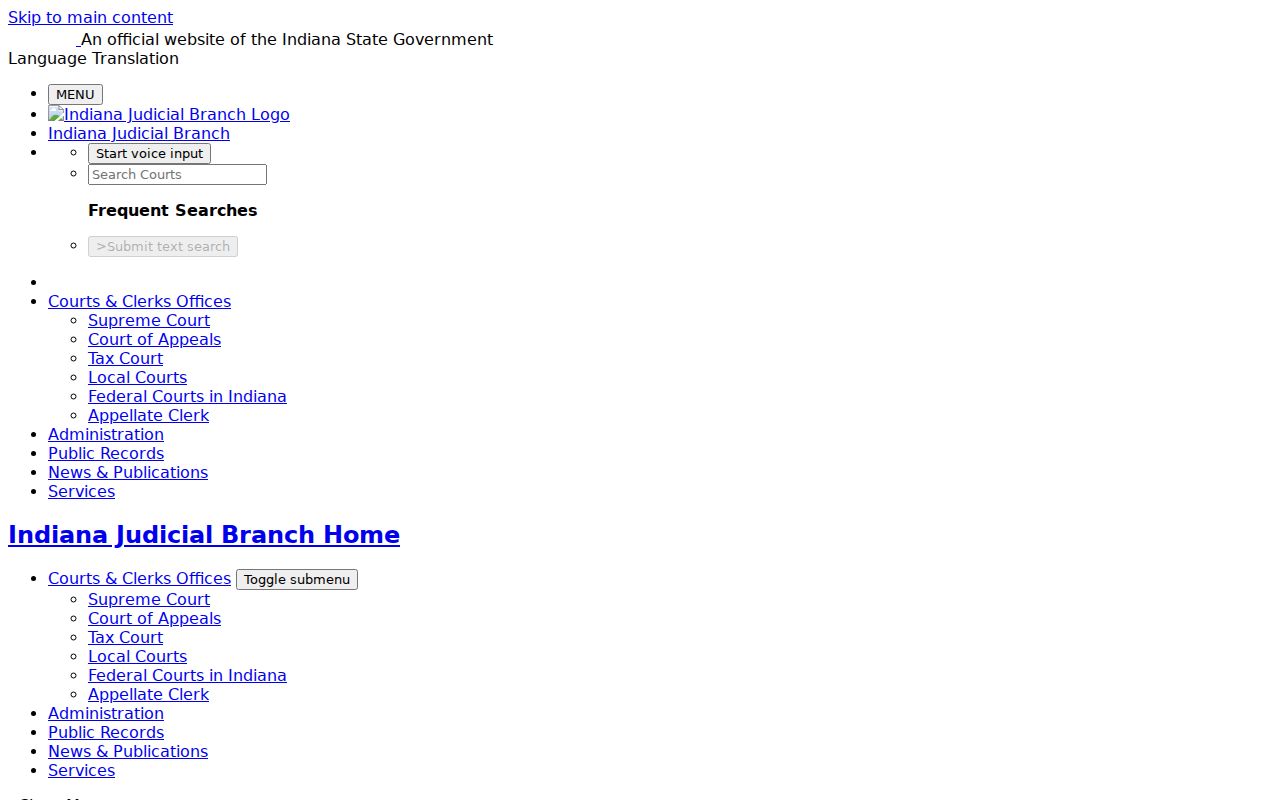
Repeat a search often enough and a captcha may appear. That is an access control, not a sign the docket is down.
What a Case Search Returns
A public case summary can list the court, case number, filing date, status, type, caption, parties, attorneys, events, hearings, judgments, charges, and financial fields. What shows up varies by case. A filing's name and page count may appear while its image stays unavailable.
| Case number | County and court identifier |
|---|---|
| Style | Caption and public parties |
| Case type | Category and code |
| Status | Recorded open or closed state |
| Events | Filings, settings, notices, and orders |
| Documents | Metadata and permitted images |
Financial data online may be incomplete, and a closed label does not guarantee every later filing is there. Confirm dates and balances with the court when action depends on them. The MyCase help page spells out those limits.
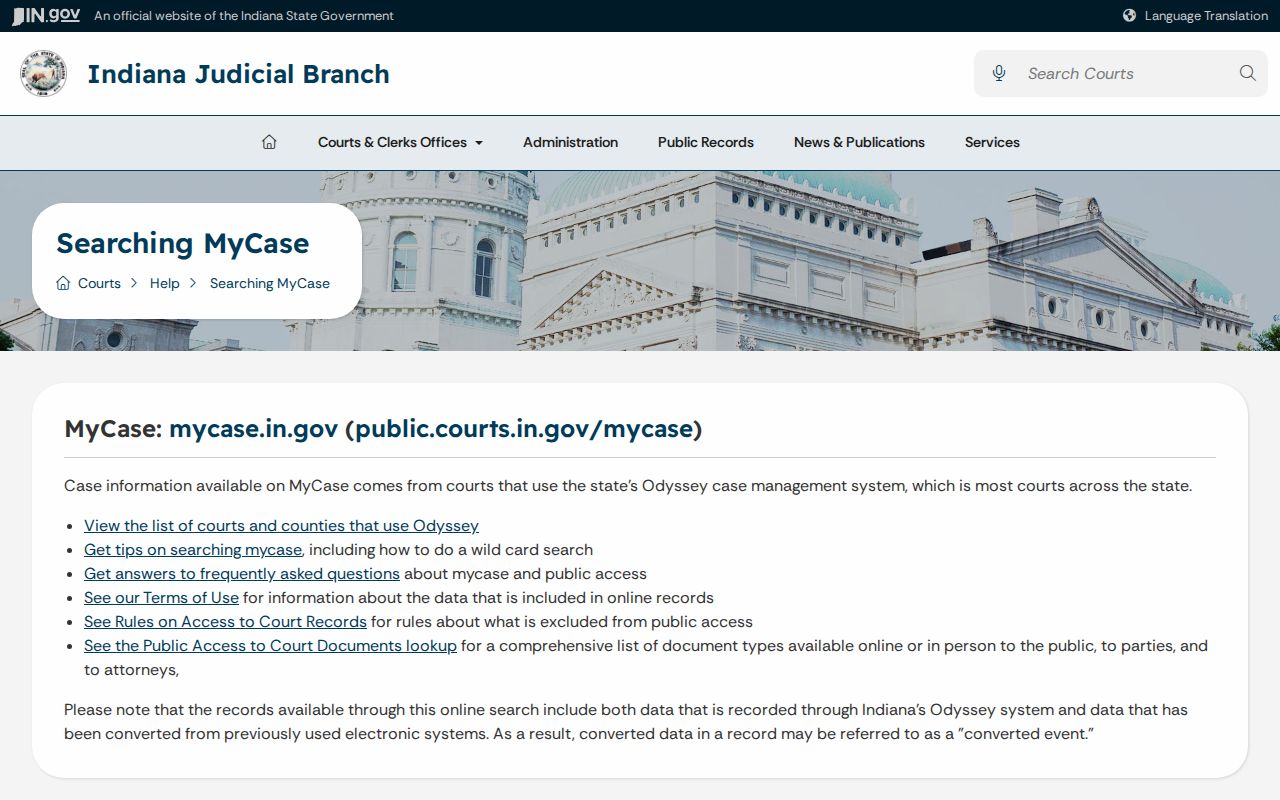
A case summary is an index and event history, not always the full file.
Jay County Case Court Choice
Pick Jay County for Circuit and Superior matters. Pick Jay County - Portland City Court for a Portland citation or ordinance case. These are separate venues, not one pool. A Portland ordinance also lets that city court handle certain Dunkirk ordinance violations, misdemeanors, and infractions. No directory lists a Redkey, Pennville, Bryant, or Salamonia court. Ask the town office or the clerk about those records.
The court you choose shapes the results. Circuit and Superior are courts of record. Portland City Court is a municipal entry with its own contact information and traffic process. Under the local assignment rule, higher-level felony categories generally route to Circuit. Other criminal matters go to Superior, subject to reassignment by the judges. Search only the municipal filter. You could miss a county case carrying the same party name.
Statewide vs County Case Search
MyCase serves as the statewide public index and includes Jay-specific filters. For Circuit and Superior files, copies, and anything not online, the Jay County Clerk is the local office to contact.
| MyCase | Jay County Clerk |
|---|---|
| Online statewide index | Local case-file custodian |
| Name and identifier searches | Known record requests |
| Summaries and some images | Plain or certified copies |
| Older or restricted gaps | Offline access guidance |
The clerk handles counter, mail, fax, email, and phone requests. Say who the parties are, give the number, the document, the date, how many copies, and whether certification is needed. Published phone numbers conflict, so verify the current one before sending payment.
Indiana Courts and Jay Case Access
The Indiana Courts portal runs court-connected services, while public lookup stays on MyCase. Eligible parties can pass an identity check and use an access code for limited document viewing.
Registration does not open excluded material or replace clerk certification. Party access is tied to one person's identity and one case. Its limited duration and renewal rules set it apart from the open public index. Attorneys log in through their own authenticated access. No one should assume another person's access code can lawfully unlock a record.
Jay County Case-Number Caution
The MyCase terms warn that a bare case-number query can pull up a record with no other filters applied. Check every character, the court segment, and the case type.
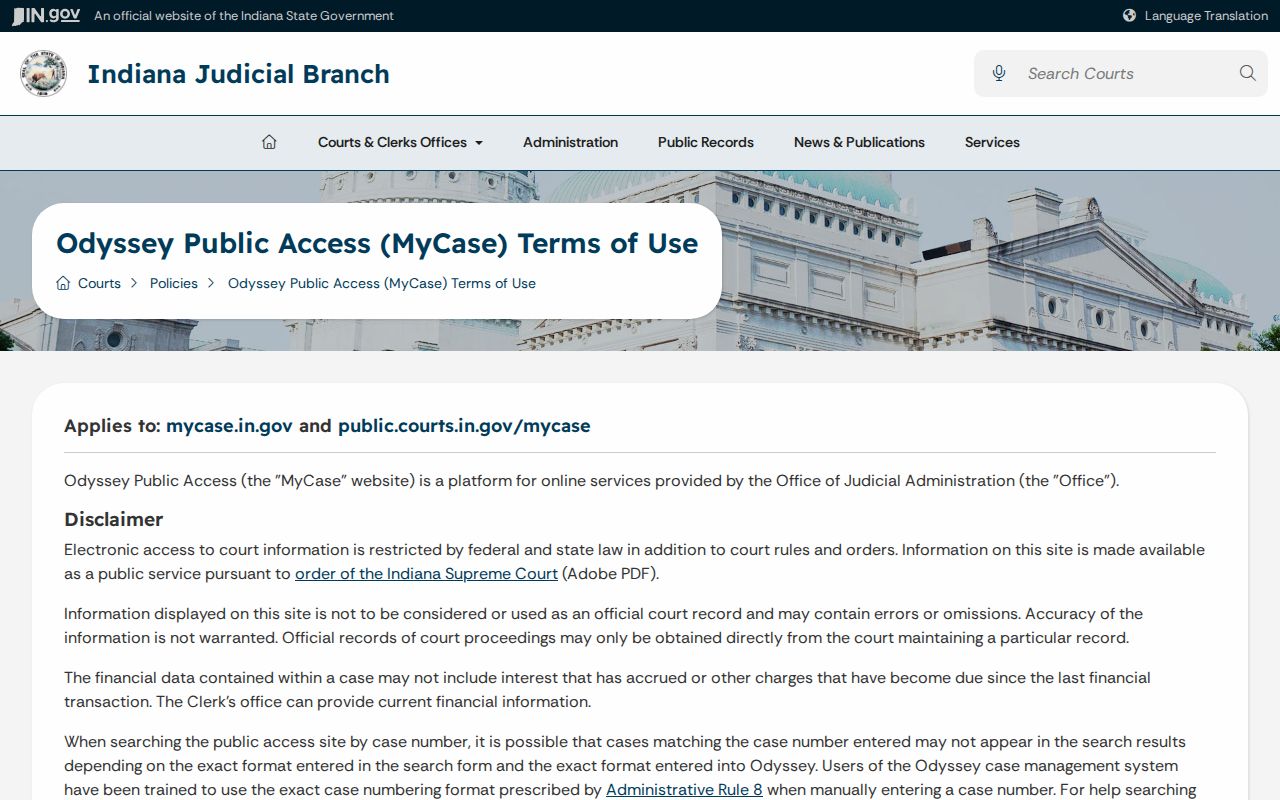
Then compare the court, the parties, and the filing date against the source paper. The two-digit year and month tell you when the case entered the system. They do not mark when each event took place. Case-type codes, like a felony or civil collection label, mark the docket classification. The final sequence separates that filing from other cases. Those are the cases opened in the same court and period.
Access and Restricted Cases
Indiana treats court records as public by default, though its access rules carve out protected data. Sealed files, expunged matters, juvenile cases, adoptions, and other confidential records may be limited or simply missing. So a blank result is not always a privacy wall. It can also mean an old offline file, a misspelled name, or the wrong court. It could be a case older than the electronic history the system holds. Redaction works differently: it hides one protected field while the rest of a public case stays in view.
Ask the clerk when you suspect an offline public record. For anything excluded, Indiana has a lawful path through the courts. Indiana Rule 9 allows an extraordinary-access request for certain excluded court records. That is a formal petition a judge reviews, not a routine search option. The clerk will not open a protected file just because a caller offers a name or a number.
The Jay County clerk's search guide traces civil and criminal holdings back to the early 1840s. Probate originals split by era. Those from 1840 through 1899 follow a separate local history and genealogy route. Originals from 1900 forward sit at the clerk's office. That historical divide matters for an old family or estate search. It may take more than a MyCase lookup.
Sometimes MyCase shows only metadata. In that situation, the Jay County court records process is the way to get a copy. Remember that a browser printout is not a certified record. Clerk staff handle research as time permits around court work. A request with a case number, document name, and date gets much further than a broad name inquiry.
Write down the exact court and case number from the matched summary before you end a docket search. Those two details let the clerk separate your file from cases filed by people with similar names. A copy request built on them lands with far more precision.