
How to Search Criminal Dockets
MyCase is the main public route into Jay County Circuit and Superior criminal cases. Pick Jay County as the court. Pick Criminal & Citation as the category. From there, search by exact case number. You can also try a citation or cross-reference number, or a party name. Portland municipal traffic or ordinance matters belong to a different office. Choose Jay County - Portland City Court for those.
Always search with the narrowest identifier you have. A Jay case number strings together several parts. These include the county code, court code, year and month, case type, and sequence. Circuit files open with 38C01; Superior files open with 38D01. An older record bearing 38E01 came from the abolished Jay County Court. It may hold converted data.
- Open MyCase and select the Case or Name search route.
- Choose Jay County and the Criminal & Citation category.
- Enter the exact identifier or a narrow name and filing-date range.
- Open the match and compare the court, status, charges, and events.
- Confirm a setting or missing document with the proper court or Clerk.
Jay County Criminal Docket Codes
Every code in a Jay County criminal docket tells a story. It shows where and when the case began. Take the neutral felony pattern 38C01-YYMM-F5-######. The first two digits mark Jay County. The next letter and digits point to Circuit or Superior Court. A date segment follows, showing the filing year and month. The case-type code closes it out by naming the class of matter.
- 38C01
- Jay Circuit Court, the default court for the felony levels named in the local rule.
- 38D01
- Jay Superior Court, the default filing route for other criminal matters.
- F5
- A Level 5 felony case-type code, not a finding that the allegation was proved.
- Converted event
- A marker that older data was moved into Odyssey and may have fewer images.
Case codes exist for a simple purpose. They steer a question toward the right office at the Jay County courthouse. They are not a substitute for the event history or the signed order itself. A docket search that comes up empty usually has a fix. Clear a wrong court filter. Retype the full case number, or run the citation through the cross-reference field before you trust the result.
What a Criminal Docket Shows
A public criminal docket summary can carry a lot of detail. It may name the court, give the filing date, list the case type and current status, and lay out the allegations, counsel, bond activity, hearings, notices, motions, and any later results. The MyCase case-summary route shows the kind of structured record behind those entries.
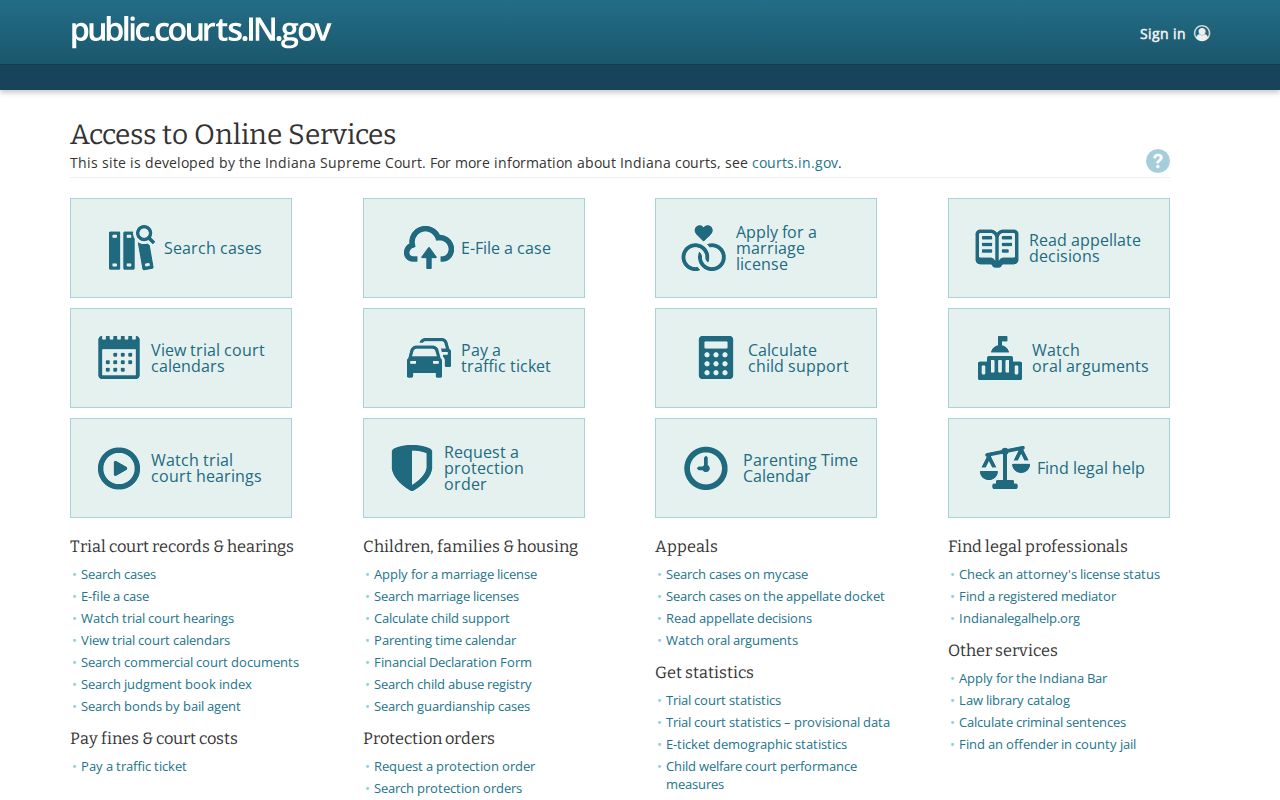
The summary view links each field to a chronological event list. One caution applies, though: metadata for a document does not guarantee the underlying image can be downloaded.
| Case number | County, court, filing period, case type, and sequence. |
|---|---|
| Charge | Statute, degree, offense date, description, modification, and original-charge data. |
| Bond or warrant | Status events and dates that remain distinct from the case disposition. |
| Setting | Hearing type, date, time, judge, result, and any public comment. |
| Disposition | Labels such as dismissed, guilty plea or admission, bench disposition, jury trial, closed, or transferred. |
Jay County Bond Docket Events
A bond entry answers one narrow question. Was the person in custody or released at that moment in the case? It is not the outcome. MyCase may list a bond number, type, status, and amount, plus dates for posting, release, forfeiture, or refund. Warrant events work the same way, showing issued, recalled, or served. None of those labels means an allegation ended in a conviction.
Read separate fields separately. A warrant status describes the warrant. A bond status describes release security. Only the plea, trial, dismissal, sentencing, or other disposition entries describe how the charge moved toward an outcome.
Treat the money figures with equal caution. MyCase may show a fee total that is blank or short of the real amount. For fines, court costs, probation fees, and where payments stand, ask the Jay County Clerk or the court directly.
Stages on a Criminal Docket
A Jay County criminal docket usually opens with a new filing plus the information. That paper formally states the charge. An initial hearing and order tend to come next. From there the docket may list appointed counsel, an appearance, a release or bond entry, notice, motions, and a pretrial conference. Cases skip steps. The sequence can shift, so treat this list as a rough guide.
Docket flow: Filing › Initial Hearing › Pretrial › Plea or Trial › Disposition › Sentencing
Near the end of a docket, look for post-judgment motions and further court action. Read the whole timeline before drawing conclusions, since one entry alone can mislead, particularly if a charge was modified or the case moved to another court. Also remember that a pretrial conference on the calendar is only a setting; it does not prove any plea, trial, or sentence took place.
Jay County Criminal Docket Assignment
Under the Jay County local rules, the Circuit Court takes the default assignment for Murder, former Class A, B, and C felonies, and Level 1 through Level 5 felonies, except Title 9 violations. Everything else criminal defaults to Superior Court. That split is why the court code at the front of a case number matters when you search.
| Default court | Criminal docket route | Search filter |
|---|---|---|
| Jay Circuit Court | Named serious felony classes and Levels 1 through 5, subject to the Title 9 exception | Jay County |
| Jay Superior Court | Other criminal filings by the local assignment rule | Jay County |
| Portland City Court | Municipal traffic and ordinance matters | Jay County - Portland City Court |
Assignments follow a rule of thumb. Either judge can shift a case for workload reasons or because the facts call for it, and one may sit in the other court when the calendar demands. So treat this as the normal route a Jay County criminal docket takes, never a guarantee for one case.
Which Court Holds Criminal Dockets
Criminal cases in Jay County sit with two courts, Circuit and Superior. The Jay County Clerk keeps the files for both. That makes the Clerk's office the place to start any docket search. The state directory puts the Clerk at 120 N Court Street, Suite 209, Portland, Indiana 47371. Call 260-726-6915 or fax 260-726-6922. You can also reach Circuit Court directly at 260-726-4044 to confirm a hearing date. Superior Court answers at 260-726-9761.
One caution is worth a minute of your time. County pages and an older copy form list different phone strings for the Clerk. Check the Indiana Judicial Branch Jay County page before you send payment or share sensitive details. Portland City Court is a separate matter entirely. Its cases live in its own office, not with the county Clerk. A city ticket payment record will not be there.
Missing Jay County Criminal Documents
A Jay County docket entry can list a document you cannot open. The filing date and page count may show, and so may the event label. Yet the image can stay closed to the public. That gap is an access boundary, not proof the filing never happened. Ask the Clerk two things. Can the item be viewed at the courthouse? Can it be ordered as a copy?
The Jay court-record copy form takes orders by mail or fax. Email works too when it carries the required information. Name the document, the filing or order date, the case number, and the party names. Add the number of copies and whether certification is needed. Copies cost $1 per page. Certification adds $3 per document. Make the check or money order payable to Clerk of Jay Circuit Court. Mailed requests should include a self-addressed stamped envelope.
In-person viewing at the Clerk counter is another route. Ask the office what courthouse viewing method it currently offers.
Public Access and Sealed Criminal Dockets
Indiana presumes public access to court records. Still, exclusions apply in criminal cases, and the criminal-record public access rule sets out the full context on its official page.
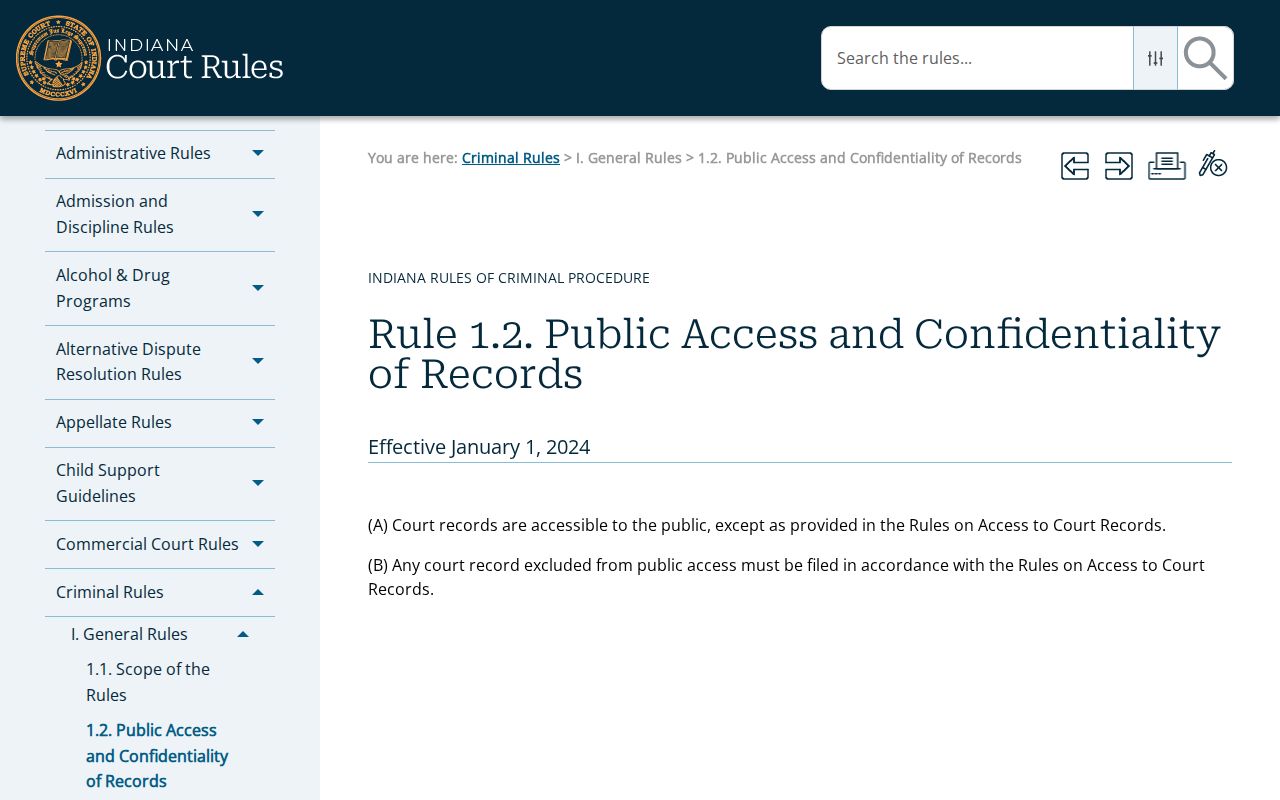
The rule text controls. When a criminal event or record carries an access limit, that language decides the question. The Access to Court Records Rule 5 governs confidential, sealed, excluded, and redacted material on its official page.
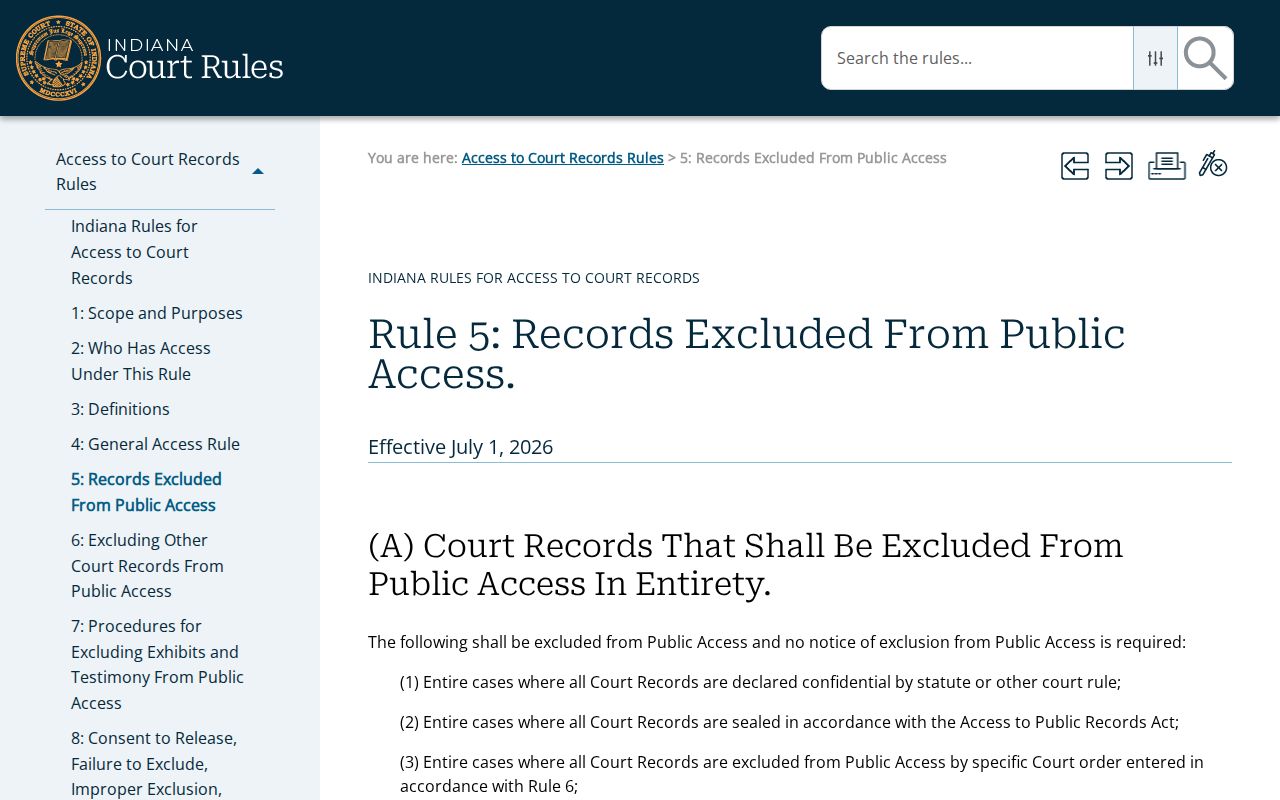
An empty result explains nothing. It cannot tell you whether Rule 5, an expungement, an older converted record, a spelling slip, or the wrong court filter caused the blank.
Jay County Criminal Search Limits
MyCase is a public case system, not a full criminal-history report. Sealed, confidential, expunged, and juvenile matters may not appear. Protection-order cases sit outside public MyCase, so use the official Protection Order Search route instead. Older cases can carry limited event or document detail.
A blank Jay County criminal docket is rarely the last word. Check the spelling first. Then try the exact case or citation number. Widen the date range. Switch between Jay County and Portland City Court where the case belongs. If nothing appears, contact the court or the Clerk directly. Do not guess why a record is missing. Do not run alternate searches to get around a restriction.
Indiana tightened its access rules in 2026. One change clarified how personal information about witnesses and victims is handled. Trust the current rules and the court office over any old summary. Public records can still hold sensitive data. Use only the facts you need to understand the court event.